

A melt pump is a positive displacement conveying device, and its flow rate is strictly proportional to its rotating speed. The melt pump consists of components such as the pump body, driving gear and driven gear, sliding bearings, front and rear end plates, and packing seals. It is mainly used for conveying, pressurizing, and metering high-temperature, high-viscosity polymer melts. Overseas, high-temperature melt pumps are widely applied in the extrusion molding of plastics, resins, rubbers, and chemical fiber products.
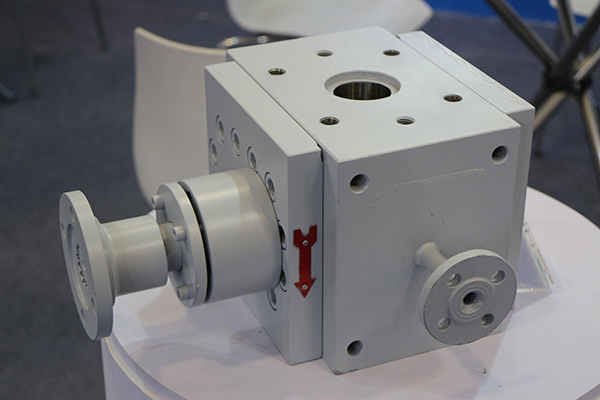
The tooth profiles of the two gears, the pump body, and the side cover plates of the melt pump form the feed zone, conveying zone, and discharge zone of the high-temperature melt pump. During operation, the melt is conveyed by the change in working volume caused by the meshing of the driving and driven gears. When the gears rotate in the specified direction, the melt enters the tooth spaces between the two gears in the feed zone. As the gears rotate, the melt is carried into the conveying zone from both sides. The gears re-mesh, forcing the melt in the tooth spaces out of the discharge zone and into the outlet pipeline. As long as the pump shaft rotates, the gears pressurize and convey the melt toward the outlet. Therefore, the pump outlet can achieve a very high pressure, while there is no strict requirement for the inlet flow rate and pressure.